
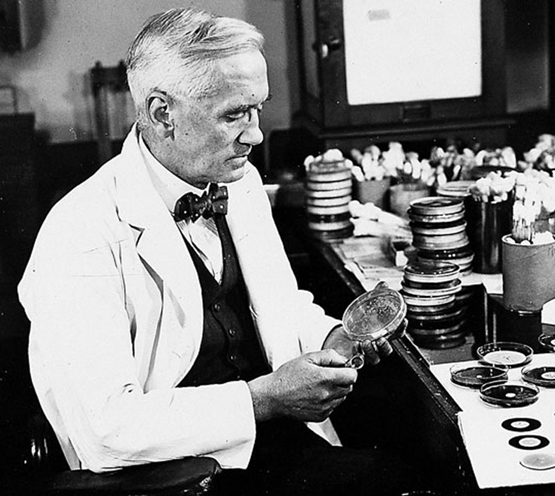
[Note: The Dialogue and Valuation Theory, or Humanistic Pragmatics, helps clarify the confusion between science and technoscience]
A common misunderstanding in the current public debate is the confusion between science, which is the methodical pursuit of truth, and technoscience, in which other ends prevail. This latter label encompasses all those technical developments that, while linked to a certain understanding of reality, are primarily oriented toward ends other than truth.
Biology is a science that provides knowledge about living beings; medicine is a technoscience focused on health. Cognitive science and neuroscience explore the brain and the neural basis of behavior and learning; pedagogy focuses on education. Physics provides knowledge about the behavior of minute elements and enormous celestial objects in the cosmos; the military and aerospace industries develop weapons and satellites. Language scientists and semioticians explore the origin, production, and understanding of meaning; generative engineers produce robots. The prevailing aims or values change: science seeks truth, while technosciences construct strategies and artifacts oriented toward other activities and aims or models, which are also values.
Science and technoscience overlap. Scientists are usually aware of the possible future developments of their findings; technoscientists should always consider the epistemic foundation of their techniques. They share common ground in most cases, but it is important not to confuse them. Science, ideally, is only conditioned by our prior theories, the material resources and instruments of research, and by our own capabilities, but it strives to subordinate personal and group interests to the pursuit of truth. Technoscience developments are often mediated by non-scientific structures. In many cases, these groups and structures are the ones that commission and fund research. The mediators can be multiple. Some examples: Medicine, among other factors, can be mediated by public health resources and strategies and by the pharmaceutical industry; Pedagogy is influenced by socioeconomic, religious, and partisan structures; the development of weaponry and satellites by militaries and geostrategy; and the development of generative machines by computer companies and state institutions themselves.
Scientific truths, reached through academic consensus, are falsifiable. This implies that academic discussion is open and research continues. A technoscientific solution is even more subject to revision, since its potential unforeseen effects must also be considered in new research. To present a technical solution or strategy as the truth itself, as the Truth, an absolute Truth, is not even falsifiable; it is either self-deception or a distortion of the truth.
José M. Ramírez, Factoría de la Lengua

Descubre más desde Factoría de la Lengua
Suscríbete y recibe las últimas entradas en tu correo electrónico.
